Welcome @ Helmholtz Program ESD -
Designing the Energy System of the Future.
Our future energy supply should be carbon neutral, affordable, and socially sustainable. With our “Energy System Design” program, we aim to lead the way and make a significant contribution to the transition to a sustainable global energy system.
NEWS

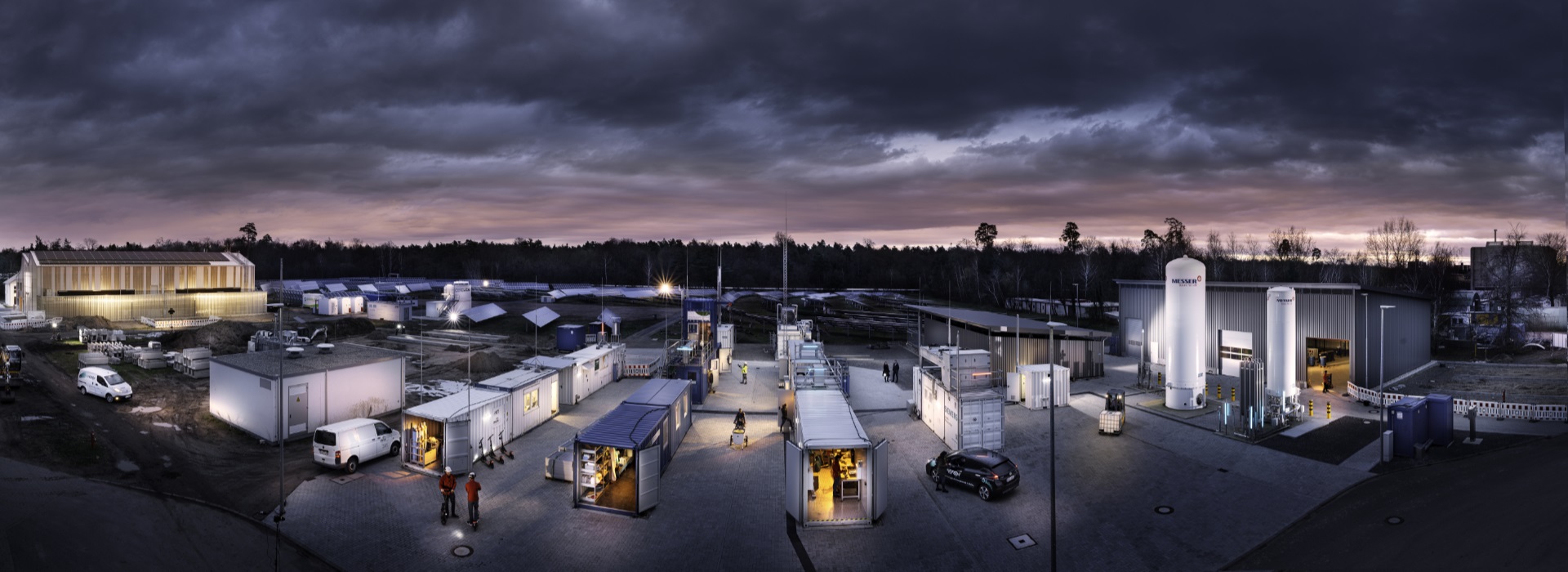
KIT is expanding the Energy Lab – Europe’s leading research infrastructure for renewable energy systems – with a sodium-ion battery storage system. Researchers will investigate this emerging energy storage technology under realistic operating conditions, further strengthening KIT’s research into safe, sustainable, and high-performance storage technologies for tomorrow’s energy supply.
Learn more
Paving the way for tomorrow’s solutions: This is the motivation of scientists from all nine state universities in Baden-Württemberg, who are working toward a future in which fossil raw materials and energy sources are increasingly replaced by sustainable alternatives. At the state press conference held on July 21, 2026 in Stuttgart, the universities presented a list of 99 research projects for a post-fossil future. KIT makes an important contribution, also with projects from our ESD program.
Learn more
Iron could become a chemical energy storage medium for making large amounts of renewable energy available over the long term. In a CO₂-neutral cycle, iron powder is combusted and then regenerated using energy. Researchers at KIT have shown that while iron will not replace hydrogen, it could serve as a valuable complement in a climate-neutral energy system.
Learn more
The Heidelberg Academy of Sciences and Humanities awarded the 2026 Ecology Prize of the Viktor & Sigrid Dulger Foundation to Benjamin Schäfer for his work on the stability and resilience of the power grid through transparent, explainable AI methods.
Learn more
Artificial intelligence (AI) is increasingly helping to ensure the stable operation of electricity grids, improve the forecasting of electricity prices and use energy more efficiently. However, in critical infrastructure such as the energy system, AI should not be a black box – decisions must remain traceable at all times. Researchers at KIT have developed a new method that allows AI-based predictions for energy systems to be analysed with significantly greater transparency. Results published in Nature Communications.
Learn more

Renewable energies require high-performance storage systems to stabilise electricity grids, make industrial processes more flexible and ensure security of supply. Through the European research project StoRIES, KIT together with partners from academia and industry, has advanced the development, provision and integration of energy storage systems – thereby contributing to strengthening Europe’s resilience and independence in energy supply. StoRIES has been successfully completed under the coordination of KIT.
Learn more